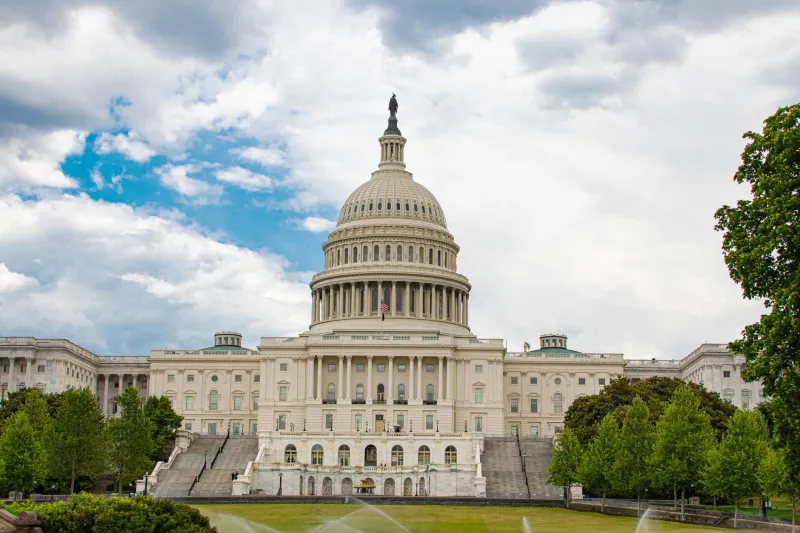
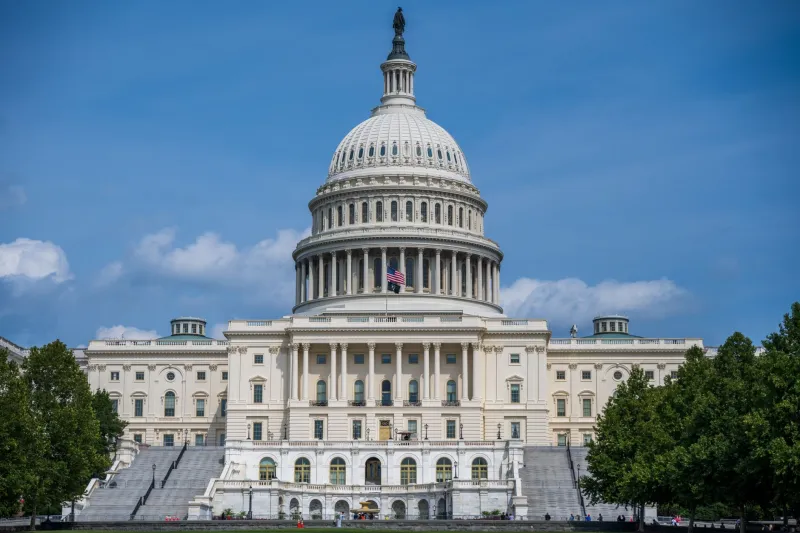
Written in the Margins: The Quiet Art of Burying Policy Inside America's Spending Bills
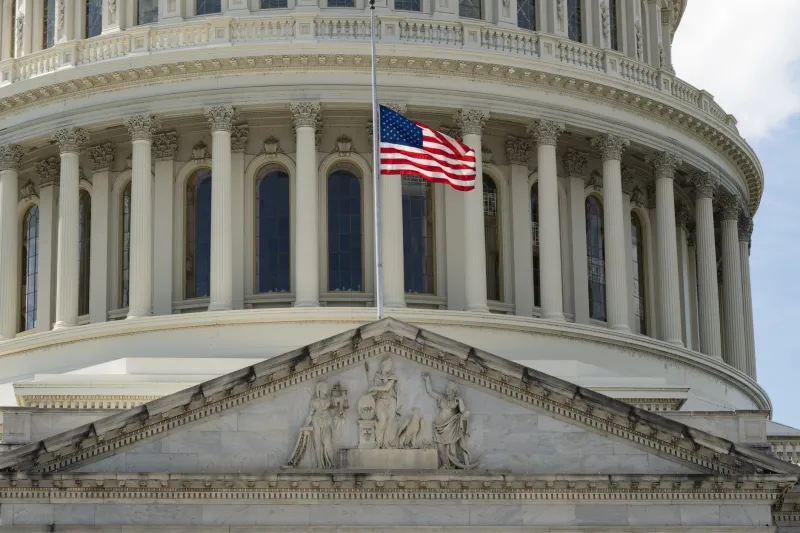
Every year, Congress produces spending legislation that runs to thousands of pages, dense with numerical tables, agency references, and the kind of bureaucratic syntax that discourages all but the most determined readers. Most lawmakers vote on these bills having absorbed a summary, a briefing from staff, or a party whip's recommendation. Very few have read the full text. Almost none have interrogated every line.
That gap between what is voted on and what is actually written is not accidental. For decades, a practiced group of appropriators, committee staff, and well-positioned lobbyists have learned to exploit it — embedding substantive policy directives inside spending language that technically governs only money, but functionally governs much more.
The result is what budget scholars sometimes call "shadow legislation": binding federal policy that never received a committee hearing, never attracted a floor amendment, and never prompted a recorded debate. It simply appeared, tucked into a continuing resolution or an omnibus package, and became law.
The Mechanics of Misdirection
Understanding how this works requires a brief primer on appropriations structure. Spending bills do not merely allocate dollar amounts. They carry "report language" — explanatory text that accompanies a bill and signals congressional intent to federal agencies — as well as statutory "riders" and "provisos" that carry the force of law. The distinction matters enormously.
Report language is technically non-binding, but agencies routinely treat it as directive. A single sentence instructing the Department of Agriculture to "prioritize" a specific commodity program, or directing the Army Corps of Engineers to expedite permits in a particular region, can shift hundreds of millions in effective federal attention without altering a single appropriated figure.
Statutory riders, by contrast, are binding. These are provisions inserted directly into the legislative text that condition funding, restrict agency discretion, or mandate specific actions. They are the more powerful instrument — and the harder one to notice when embedded in a 1,200-page omnibus bill released forty-eight hours before a government shutdown deadline.
"The leverage is extraordinary," said one former Senate Appropriations Committee counsel, who spoke on background. "You can accomplish things in four lines of a spending bill that would take two years of regular order and probably still fail. That's not a secret. That's the whole point."
Billions in the Details
The practice spans administrations and party affiliations. Budget watchdog organizations have documented numerous instances in which significant programmatic changes were achieved through spending bill language rather than standalone legislation.
In one frequently cited example, a provision tucked into a defense appropriations bill effectively altered the operational parameters of a major Pentagon procurement program — not by passing new authorization, but by restricting how appropriated funds could be spent. The change was estimated to affect more than $2 billion in contract activity. It received no dedicated committee hearing. No witnesses testified. No amendment was offered on the floor.
In another case, a single proviso in an Interior Department spending bill quietly prohibited the Environmental Protection Agency from enforcing a specific regulatory standard in a defined geographic area. The restriction had been sought by regional industry groups for years and had repeatedly failed as standalone legislation. Attached to a must-pass spending bill, it passed without notice.
Think tanks across the ideological spectrum have flagged similar patterns. The Congressional Budget Office, which scores legislation for fiscal impact, does not evaluate the full policy consequences of rider provisions — a structural gap that allows their broader effects to remain largely unquantified in the public record.
Who Holds the Pen
The concentration of this power is perhaps the most significant institutional consequence of the practice. Appropriations subcommittee chairs — twelve in the Senate, twelve in the House — control the drafting of the twelve annual spending bills that theoretically fund the entire federal government. In practice, the chairs work in close partnership with their ranking members and, crucially, with a small number of senior committee staff who possess institutional knowledge that no elected member can fully replicate.
This inner circle is remarkably small. Veteran budget analysts estimate that the substantive drafting of any given spending bill involves no more than a handful of people on each side of the Capitol. The rest of Congress receives the product, often under time pressure, and is expected to vote.
"The full chamber has essentially delegated its appropriations power to a subcommittee, which has in turn delegated much of the actual drafting to staff," said a senior fellow at one Washington budget research institution. "That's a very long chain of delegation from the voters who elected those 435 members."
The access implications are equally significant. Lobbyists who cultivate relationships with appropriations staff — rather than with the elected members themselves — are frequently better positioned to influence spending bill language. Industry associations, law firms, and advocacy organizations maintain specialists whose sole purpose is tracking and influencing this narrow but consequential slice of the legislative process.
The Reform Conversation That Never Quite Arrives
Periodic calls for greater transparency in the appropriations process have produced modest results at best. Both chambers have, at various points, adopted rules requiring that significant policy riders be identified or that spending bills be made available for a minimum review period before floor votes. These rules have been waived with considerable regularity, particularly during the end-of-year legislative crunches that tend to produce the most expansive omnibus packages.
The Congressional Budget Transparency Act, introduced in various forms over multiple sessions, would require more detailed public disclosure of the origins of spending bill provisions. It has never advanced to a floor vote in either chamber.
Some members have argued that the opacity is a feature, not a failure — that the ability to resolve politically sensitive disputes through spending language, away from the glare of recorded amendments, actually allows Congress to function when it otherwise could not. There is something to this argument. Several contentious policy standoffs have been quietly resolved through appropriations compromises that would have collapsed under floor scrutiny.
But that pragmatic defense carries its own cost. A legislative process that works best when the public is not watching is a process that has, in important ways, already drifted from its constitutional foundations.
Accountability in the Margins
For engaged citizens attempting to understand how federal priorities are actually set, the appropriations process presents a genuine challenge. The bills are public documents, technically available to anyone. But their length, their technical vocabulary, and the compressed timelines under which they are considered make meaningful public scrutiny nearly impossible without dedicated expertise.
Several nonprofit organizations now publish detailed analyses of spending bill riders and report language, attempting to surface provisions that would otherwise pass without public awareness. Their work is valuable — and largely read by the same Washington insiders who already know where to look.
The deeper question is structural. As long as Congress relies on must-pass omnibus packages to fund the government, and as long as those packages are assembled under deadline pressure by a small group of appropriators and their staff, the margins of America's spending bills will remain one of its most consequential — and least examined — legislative spaces.
The policies written there are no less real for being hard to find. Their effects are felt in agency budgets, regulatory behavior, and programmatic priorities across the federal government. They simply arrived without the debate that democratic accountability ordinarily requires.