Governing Without Permission: The Rise of Cross-Party Policy Alliances That Party Leaders Didn't Build and Can't Control
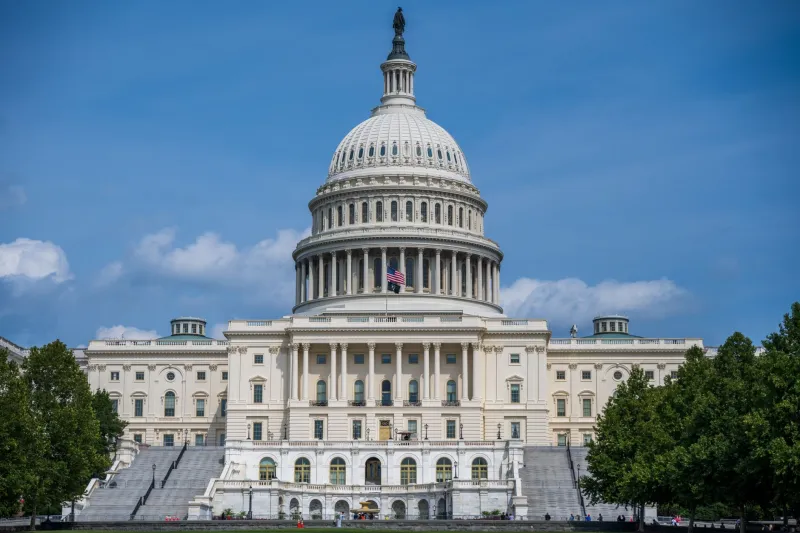
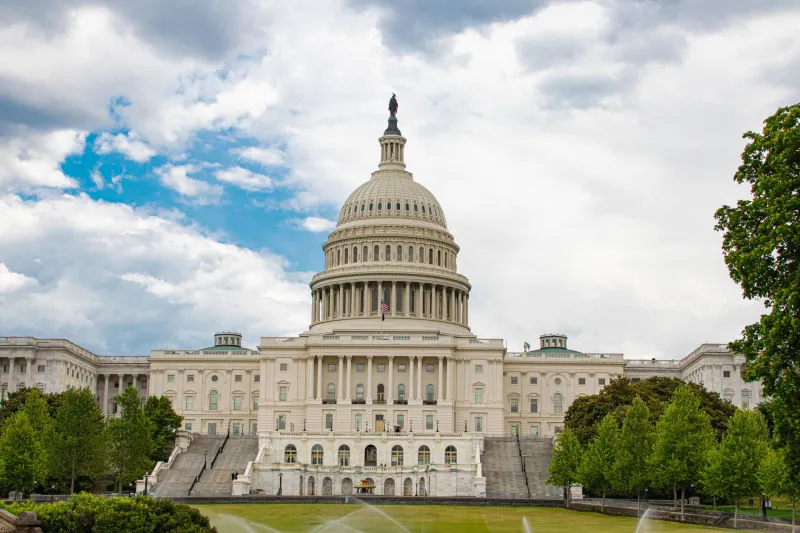
The meeting rooms are rarely publicized. The membership lists are seldom posted. And the leadership of both parties is frequently the last to know what is being discussed inside them. Across Capitol Hill, a quiet reorganization of congressional power is underway — one that is less about ideology than about pragmatism, and less about party loyalty than about getting something done.
Members of Congress from both sides of the aisle are increasingly organizing around specific policy domains — artificial intelligence governance, rural broadband access, veterans' mental health, pharmaceutical supply chain security — rather than around the partisan affiliations that formally define their political identities. These informal, cross-party working groups operate with minimal institutional structure, no official recognition from House or Senate leadership, and, in many cases, a deliberate preference for discretion over visibility.
What is emerging, analysts say, is a secondary architecture of congressional influence — one that coexists with, and sometimes quietly supersedes, the formal mechanisms of party power.
The Limits of the Caucus Model
Formal congressional caucuses have long served as the official vehicles for organizing lawmakers around shared interests. The Congressional Black Caucus, the House Freedom Caucus, the New Democrat Coalition, and dozens of similar bodies each carry recognized status, staff support in some cases, and established relationships with party leadership. They are, in the traditional sense, the legitimate forums through which members signal their priorities and negotiate their positions.
But that model has shown its limitations. Formal caucuses are, almost by definition, partisan or ideologically bounded. They are also increasingly subject to the same pressures that have made floor voting so rigid — the expectation of unity, the surveillance of advocacy groups, and the ever-present threat of primary challenges funded by outside money.
"The caucus structure reflects the party structure," said one senior House aide who has worked under members of both parties and requested anonymity to speak candidly. "And the party structure right now is not designed for problem-solving. It's designed for positioning."
Informal cross-party working groups, by contrast, carry none of that institutional weight. They can be convened quietly, disbanded without consequence, and populated by members who would never publicly associate themselves with one another's broader agendas. That flexibility, paradoxically, has made them more functional.
Real Coalitions, Concrete Results
The evidence of their effectiveness is visible, if underreported. The bipartisan group of senators that quietly negotiated the framework for the CHIPS and Science Act spent months working through technical and political obstacles before their efforts became public — a process that several participants later described as dependent on the absence of formal party oversight. The informal working group on AI policy that has operated across both chambers since 2023 has produced a series of staff-level briefings, shared draft frameworks, and at least two pieces of introduced legislation that bear the fingerprints of members whose public postures on technology regulation are sharply divergent.
On veterans' issues, a cross-party cluster of members with significant military constituencies has repeatedly found common ground on appropriations and benefits questions that would otherwise have been routed through the partisan machinery of the relevant committees. On rural broadband, the alignment between conservative members from agricultural states and progressive members from economically distressed regions has generated a working consensus that neither party's leadership fully engineered or controls.
"There are issues where the geography matters more than the party," observed a veteran Democratic House member from a rural district during a recent public forum on congressional procedure. "And when that's true, you find your colleagues in unexpected places."
Operating in the Margins
What makes these coalitions structurally distinct is precisely their informality. Unlike caucuses, they hold no recognized status in the congressional directory. Unlike committees, they have no subpoena power, no formal jurisdiction, and no staff resources drawn from the institution. They exist, in essence, because members choose to make them exist — and they dissolve when that choice is withdrawn.
This fragility is, for some participants, a feature rather than a defect. The absence of formal structure means the absence of formal accountability to party whips, to ideological enforcers, and to the outside organizations that monitor congressional behavior with increasing granularity. A member can attend a working group session on pharmaceutical pricing without that attendance appearing in any official record, without triggering a loyalty test from the relevant party committee, and without generating opposition research material for a future primary opponent.
The opacity is not without its critics. Transparency advocates have raised legitimate questions about whether policy discussions that ultimately influence legislation should occur in settings that are entirely shielded from public scrutiny. The argument that informality enables cooperation does not automatically answer the argument that cooperation should be visible to the constituents whose interests are ostensibly being served.
What It Signals About Congressional Power
The proliferation of these informal coalitions reflects something deeper than legislative pragmatism. It reflects a growing recognition among members that the formal party apparatus — increasingly consumed by messaging operations, fundraising imperatives, and the management of internal factional conflict — is not reliably capable of producing policy outcomes.
For members who came to Congress with specific legislative ambitions, that recognition has produced a kind of quiet entrepreneurialism. They are building the relationships, assembling the technical knowledge, and identifying the cross-partisan alignments that formal leadership has neither the bandwidth nor, in some cases, the incentive to pursue.
"Leadership's job has changed," said a longtime Republican Senate staffer. "It used to be about managing the legislative calendar and getting members to yes. Now it's about managing the conference and keeping members from going off-message. Those are not the same job, and the second one leaves a lot of legislative space unoccupied."
That unoccupied space is where the informal coalitions have taken root.
The Question of Durability
Whether these cross-party working groups represent a durable shift in how Congress organizes itself — or merely a tactical adaptation to an unusually polarized moment — remains genuinely uncertain. Their effectiveness depends heavily on individual relationships, and those relationships are vulnerable to the personnel turnover that defines every election cycle. A working group built around three or four key members can dissolve overnight if two of them lose their seats or decide to redirect their political capital.
What seems less uncertain is that the appetite for this kind of organizing is not diminishing. As the formal party structures have grown more rigid and the cost of public bipartisan association has increased in primary-dominated electoral environments, the value of informal, deniable, results-oriented cooperation has grown correspondingly.
Congress has always had its back channels. What appears to be changing is the degree to which those channels have become load-bearing — not supplementary routes around the formal system, but increasingly central pathways through which actual governing gets done. That shift, quiet as it remains, may be among the most consequential developments in the internal politics of the institution.