The Calculated Exit: How Veteran Lawmakers Are Engineering Their Own Retirements to Hold the Line for Their Parties
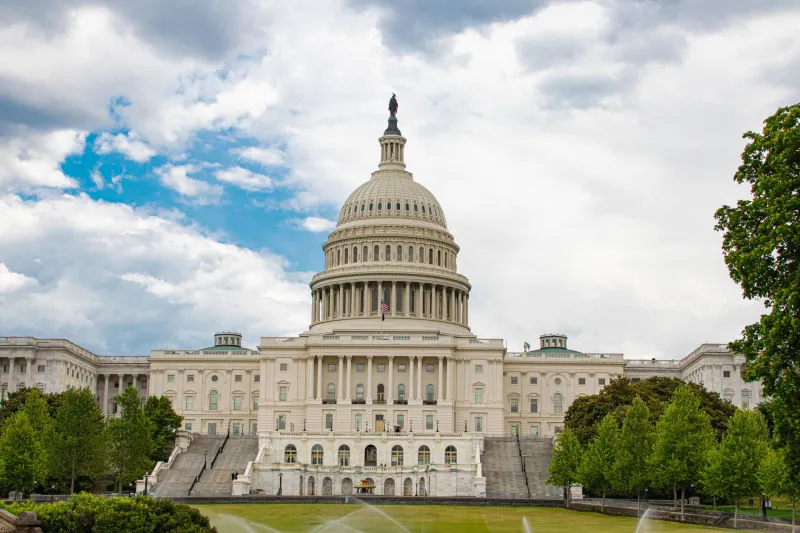
On the surface, a congressional retirement announcement reads like a familiar Washington ritual — a press release, a floor speech, perhaps a reception in Statuary Hall. But behind the ceremony, an increasingly sophisticated set of strategic calculations is driving some of the most consequential decisions being made on Capitol Hill. Veteran lawmakers, many with decades of institutional knowledge and accumulated political capital, are not simply walking away. They are engineering their exits with a precision that rivals any legislative negotiation.
The pattern has become difficult to ignore. In recent cycles, a disproportionate share of retirements has come not from vulnerable incumbents bracing for electoral defeat, but from entrenched legislators in relatively safe seats — members whose departures, on their face, make little obvious political sense. The timing, the geography, and the sequencing of these announcements, however, tell a more deliberate story.
Timing Is Everything
Congressional election law and party primary calendars create narrow windows in which a sitting member's retirement can either help or severely damage their party's prospects. Announce too early, and the seat becomes a target, drawing a crowded and potentially divisive primary field. Announce too late, and the party apparatus has insufficient time to recruit, vet, and fund a credible successor.
Seasoned members understand this calculus intimately. Several senior House Democrats and Republicans in recent cycles have coordinated their retirement announcements directly with their respective campaign committees, effectively handing party operatives a managed transition rather than a chaotic scramble. In some instances, retiring members have gone further — quietly signaling to preferred successors months in advance, allowing those candidates to build donor networks and name recognition before any public announcement is made.
"These aren't spontaneous decisions," said one senior Democratic strategist who has worked on multiple competitive House races. "In a lot of cases, you're looking at a member who has spent six months on the phone with DCCC before they ever call a press conference."
Republican leadership has employed similar methods, particularly in districts where a retiring incumbent's personal brand has historically outperformed the underlying partisan lean of the seat. In those cases, the choice of successor is not merely a preference — it is arguably the single most important factor in whether the seat remains in GOP hands.
The Succession Problem
For all the strategic intent behind these managed exits, the execution has proven far messier in practice. The departure of a long-serving committee chair or a member with deep ties to a specific constituency does not simply transfer political capital to a handpicked heir. Voters, donors, and local party organizations do not always follow the script.
Several high-profile retirement cycles in recent years have demonstrated the limits of top-down succession planning. In districts where retiring incumbents endorsed specific successors, primary challengers — often ideologically distinct from the outgoing member — have successfully disrupted the preferred transition. The result has been seats that swing unexpectedly competitive in general elections, or new members who arrive in Washington with little obligation to the party establishment that had hoped to shape their trajectory.
This dynamic is particularly acute in the House, where redistricting has scrambled the political geography of dozens of districts, making historical precedent an unreliable guide to future electoral performance. A seat that a veteran member held comfortably for twenty years may present an entirely different challenge for a first-time candidate operating in a redrawn constituency.
Leadership Pipelines Under Pressure
Beyond the immediate question of seat retention, the accelerating pace of voluntary retirements is creating a structural challenge for both parties' leadership pipelines. Congress has traditionally operated on a seniority system that rewards patience and longevity — members accrue influence over years and decades, eventually ascending to committee chairmanships and leadership positions that carry genuine legislative power.
When experienced members exit in clusters, as has occurred with increasing frequency in recent cycles, they leave behind not just vacant seats but vacant institutional roles. The committee expertise, the cross-aisle relationships, the procedural knowledge that takes years to develop — none of that transfers automatically to a successor, regardless of how carefully the transition was managed.
House Republican leadership has been particularly candid about the challenge. The departure of multiple senior appropriators and committee chairs in a compressed timeframe has forced leadership to accelerate the elevation of members who, in a previous era, would have spent additional years in apprenticeship roles before assuming significant responsibility. The consequences of that compression — less experienced negotiators, thinner relationships with Senate counterparts, reduced familiarity with the bureaucratic machinery of federal agencies — are difficult to quantify but widely acknowledged among Hill veterans.
Democrats face a parallel, if differently configured, version of the same problem. The retirement of several senior members who served as informal bridges between the party's progressive and moderate wings has removed institutional shock absorbers that once helped contain intraparty conflict. Without those relationships, ideological tensions that might previously have been managed through private negotiation now surface more readily as public confrontations.
The Influence That Lingers
Retirement from Congress does not, of course, mean retirement from influence. Many departing members have leveraged their exits into positions that allow them to continue shaping the institution from the outside — as lobbyists, as bundlers for successor candidates, as informal advisers to leadership, or as principals at the advocacy organizations and think tanks that orbit Capitol Hill.
This afterlife of influence complicates the clean narrative of generational transition. A retiring appropriations chair who departs the House but immediately joins a firm representing defense contractors retains a form of leverage over the very committee they once led — one that is now exercised through relationships and institutional knowledge rather than a formal vote. The chamber changes its membership; the underlying network of relationships changes far more slowly.
For engaged observers of congressional politics, the retirement wave of recent cycles represents something more than a routine shuffling of personnel. It is a window into the mechanics of institutional self-preservation — the way a political body attempts to manage its own succession under conditions of intense partisan pressure, demographic change, and electoral uncertainty.
Whether those mechanisms are sufficient to maintain the kind of experienced, functional legislative institution that complex governance demands is a question both parties are now, whether they acknowledge it publicly or not, being forced to answer in real time.
The exits will continue. The calculations behind them will only grow more intricate.