When the District Wins: How Economic Interests Are Quietly Splintering Congressional Party Discipline
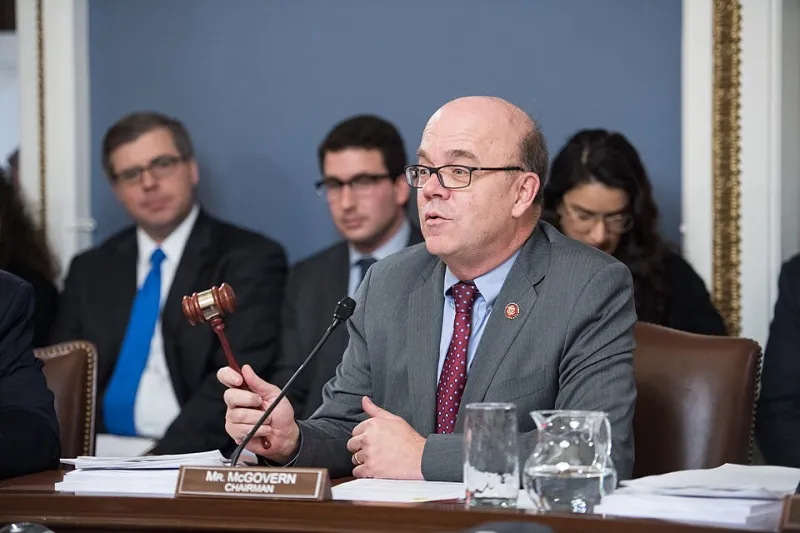
Photo: US Congress members voting chamber floor session Washington DC, via www.worldmap1.com
For most of the past two decades, the prevailing story of Congress has been one of hardening partisan division. Voting records have grown more uniform within each party. Bipartisan coalitions have become rarer and more fragile. Leadership on both sides of the aisle has wielded procedural tools with increasing aggression to enforce conformity. And yet, beneath this surface narrative of ideological consolidation, a countervailing force has been gaining strength — one rooted not in political philosophy but in the far more immediate pressures of economic geography.
When a Republican congressman from a soybean-producing district breaks with his party's trade hawks, or a Democratic senator from a coal-adjacent state quietly works to soften her party's energy transition timeline, the explanation rarely involves a change of heart about first principles. It involves farmers, miners, and manufacturers back home whose livelihoods are directly implicated in the outcome. Economic self-interest, it turns out, is proving to be a more reliable predictor of congressional defection than ideological heterodoxy — and its influence is growing.
The Geography of Dissent
Congressional districts are not economically uniform, and they never have been. But the relationship between a district's economic base and its representative's voting behavior has become more direct and more politically consequential as constituent communication has intensified and primary election threats have sharpened members' attention to local economic grievances.
Consider the fault lines that have emerged around trade policy. Republican leadership has historically championed free trade orthodoxy, but that position has faced sustained pressure from members representing manufacturing-heavy districts where import competition has cost jobs. The political logic is straightforward: a representative whose district includes a major automotive supplier or a steel mill cannot afford to treat trade policy as an abstract ideological exercise. The workers in those facilities vote. Their employers donate. And their economic anxiety has a way of expressing itself at the ballot box with considerable force.
Similar dynamics have fractured Democratic coalitions on energy and environmental policy. Members representing districts with significant fossil fuel employment — whether in West Virginia, Pennsylvania, or parts of the Mountain West — have repeatedly found themselves at odds with their party's climate-oriented wing, not because they dispute the underlying science but because the economic transition costs fall disproportionately on their constituents.
The Personal Dimension
Beyond constituency economics, the personal financial interests of members themselves have become an increasingly visible source of defection. Congressional financial disclosure records reveal that a significant share of sitting members hold substantial investments in industries directly affected by legislation their committees consider. While ethics rules prohibit members from voting on matters that create direct personal financial conflicts, the regulations leave considerable gray area — and the broader pattern of alignment between personal investment portfolios and legislative behavior has attracted growing scrutiny.
The phenomenon is not partisan. Members across the ideological spectrum have faced questions about votes that appeared to benefit sectors in which they or their immediate family members held significant financial stakes. The issue is structural: Congress is composed of individuals whose pre-legislative careers and ongoing financial lives do not disappear when they take office, and the legislative domains that matter most — healthcare, finance, energy, technology — are precisely the ones where personal economic exposure is most likely to be significant.
Leadership's Diminishing Grip
Congressional party leaders have traditionally managed dissent through a combination of carrots and sticks — committee assignments, campaign contributions, procedural favors, and the implicit threat of primary opposition. These tools remain available, but their effectiveness has eroded in an environment where outside money and grassroots organizing have made members less dependent on leadership's institutional resources.
The proliferation of well-funded outside groups — both ideological and industry-aligned — has provided members with alternative sources of campaign financing that reduce their vulnerability to leadership pressure. A member who can rely on robust support from agricultural industry PACs or energy sector donors is considerably less susceptible to threats about committee assignments than one who depends primarily on the party apparatus for electoral survival.
At the same time, the rise of small-dollar digital fundraising has created a parallel dynamic in which members who publicly defy leadership on economic grounds can sometimes convert that defiance into a fundraising asset, particularly when the defection aligns with a visible constituent interest. The member who stands up for local farmers against a trade deal may face leadership's displeasure, but they may also find their next fundraising email writes itself.
Fault Lines With Staying Power
What distinguishes the current pattern of economically motivated defection from earlier episodes of congressional independence is its structural character. Previous generations of congressional mavericks were often individual personalities — members whose ideological heterodoxy or personal temperament led them to chart independent courses. The current phenomenon is more systemic, rooted in the increasingly diverse economic profiles of congressional districts and the expanding financial complexity of the members who represent them.
Several policy domains appear particularly vulnerable to continued fracturing. Trade policy remains a persistent source of intraparty tension, with industrial, agricultural, and technology interests frequently pulling in different directions. Healthcare legislation — particularly provisions affecting pharmaceutical pricing, hospital reimbursement, and insurance regulation — generates defections in both directions, as members with significant healthcare industry presence in their districts navigate competing pressures. Tax policy, predictably, produces its own geography of dissent, with provisions affecting real estate, energy production, and financial services reliably generating cross-party coalitions of the economically interested.
What This Means for the Next Decade
If the current trajectory holds, the implications for congressional power dynamics are considerable. Leadership's ability to assemble reliable majorities on major legislation will depend increasingly on its capacity to accommodate economic interests that do not map neatly onto partisan categories. Legislative coalitions will be built and rebuilt around specific provisions rather than broad ideological frameworks, demanding greater flexibility from party leaders accustomed to enforcing strict uniformity.
For engaged citizens trying to understand why their representative voted a particular way on a bill that seemed to cut against the party line, the answer may be less about principle than about payroll — the industries that employ their neighbors, the commodities that sustain their regional economy, and the financial stakes that make the abstract very concrete very quickly.
Party loyalty, it turns out, has always had a price. What has changed is how openly that price is now being negotiated.