Defying the Caucus: How Senior Committee Members Are Becoming Their Party's Loudest Internal Critics
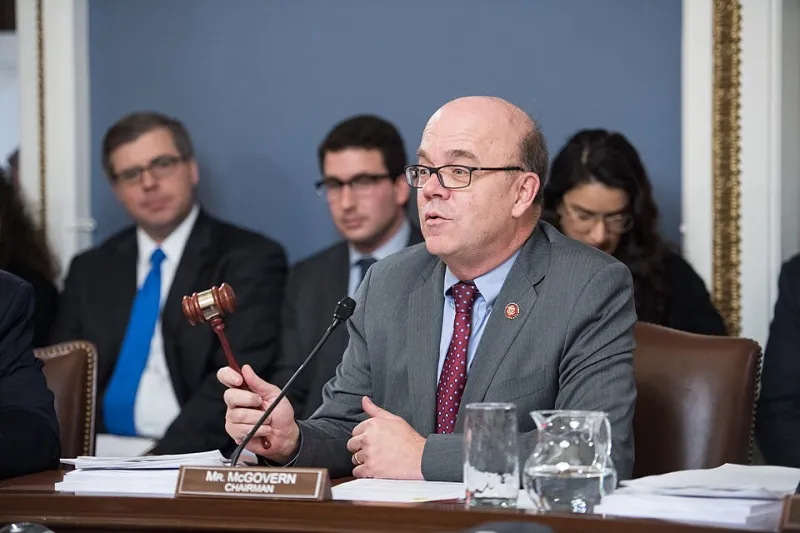
Photo: U.S. House Photographers, Public domain, via Wikimedia Commons
For decades, the unspoken compact of congressional committee life was straightforward: senior members accumulated influence, and in exchange, they delivered votes when leadership needed them. Ranking members — the most powerful minority figures on any given committee — were expected to serve as loyal counterweights to the opposing party, not as disruptors of their own. That compact, observers say, is fraying in ways that may prove difficult to reverse.
Across both chambers, a pattern has emerged with increasing regularity. Senior members, their political futures largely secured, their institutional knowledge unmatched, are using their committee platforms not merely to oppose the other side but to publicly break with their own party's legislative priorities. The consequences for the broader functioning of Congress are still unfolding — but the signal they send is already reshaping how leadership approaches the legislative calendar.
The Anatomy of a Revolt
The mechanics of a ranking member's dissent differ meaningfully from a backbencher's protest vote. When a freshman legislator votes against the party line, leadership can absorb the blow, attribute it to constituent pressure, and move on. When a ranking member does it — someone who sits at the committee table, who has access to every briefing, who has spent years cultivating relationships with the very colleagues they are now opposing — the disruption carries institutional weight.
In recent congressional sessions, several such moments have drawn significant attention. On the House Appropriations Committee, senior minority members have on multiple occasions declined to support their own caucus's spending framework, citing what they described as fiscal irresponsibility dressed in partisan clothing. On the Senate Foreign Relations Committee, a ranking member's public opposition to a foreign aid package championed by party leadership created procedural complications that forced weeks of renegotiation. These were not spontaneous acts of conscience; they were calculated deployments of seniority.
"When someone at that level breaks ranks, it doesn't just affect the vote count," one senior Capitol Hill aide, speaking on background, explained. "It gives cover to five or six members who were already uncomfortable but waiting for permission. That's how a two-vote problem becomes a ten-vote problem overnight."
Principle, Politics, or Both
The motivations behind these defections rarely fit neatly into a single category. Some ranking members point to genuine policy disagreements — accumulated frustrations with a party platform that has, in their view, drifted from its foundational commitments. Others are navigating the complex arithmetic of home-state politics, representing districts or states where the national party's brand has become a liability rather than an asset.
There is also a generational dimension worth examining. Several of the most prominent recent dissenters are legislators who entered Congress during an era when bipartisan committee work was a professional expectation rather than a political anomaly. For these members, the current model — in which committee hearings function largely as messaging exercises and markups are choreographed for cable news — represents a degradation of an institution they spent careers trying to strengthen.
"The committee system was designed to be the place where serious legislating happened," said one former senior committee staff director with experience on both sides of the aisle. "When a ranking member decides to use that platform to signal disagreement with their own leadership, part of what they're doing is reasserting the committee's relevance. It's institutional as much as it is personal."
The Cost of Crossing Leadership
For all the principled framing, defiance carries real consequences. Leadership controls committee assignments, campaign fundraising support, and the scheduling of legislation that individual members care about. A ranking member who breaks ranks too visibly risks finding their own priorities quietly shelved, their preferred amendments bypassed, their access to leadership briefings curtailed.
Yet the calculus has shifted in ways that complicate the traditional punishment structure. In an era of independent fundraising through small-dollar online donations, many senior members are less financially dependent on party apparatus than their predecessors were. The rise of media prominence as a political currency — where a well-placed Sunday show appearance can generate more constituent engagement than a year of quiet committee work — has also reduced leadership's leverage. A member who becomes the story of the week for defying their party often returns to their district to find their approval ratings intact or improved.
This dynamic has not gone unnoticed by party strategists. Several leadership offices have reportedly begun conducting what one aide described as "pre-markup temperature checks" — informal conversations designed to identify potential dissent before it becomes public, giving leadership the opportunity to adjust bill language or offer concessions rather than suffer the spectacle of open revolt.
A Structural Shift or a Passing Moment
Whether this represents a durable change in congressional culture or a temporary function of an unusually polarized political environment remains genuinely contested among those who study the institution.
Arguments for durability point to structural factors: the weakening of party infrastructure, the media incentives that reward individual prominence over collective discipline, and the growing ideological heterogeneity within both major parties. Arguments for impermanence note that congressional institutions have historically been remarkably effective at absorbing and neutralizing disruption — and that the same seniority system that empowers ranking members to dissent also gives leadership powerful tools to restore order over time.
What is difficult to dispute is the immediate effect on the legislative process. Bills that might once have moved through committee with minimal internal friction are now subject to extended negotiation, public positioning, and the kind of visible intra-party conflict that complicates floor scheduling and conference negotiations. For a Congress already operating under significant institutional strain, the addition of organized senior dissent is a variable that leadership on both sides is still learning to manage.
The revolt from within, it turns out, may be the most consequential kind.