Across the Aisle, After Hours: The Quiet Alliances Keeping Congress From Complete Gridlock

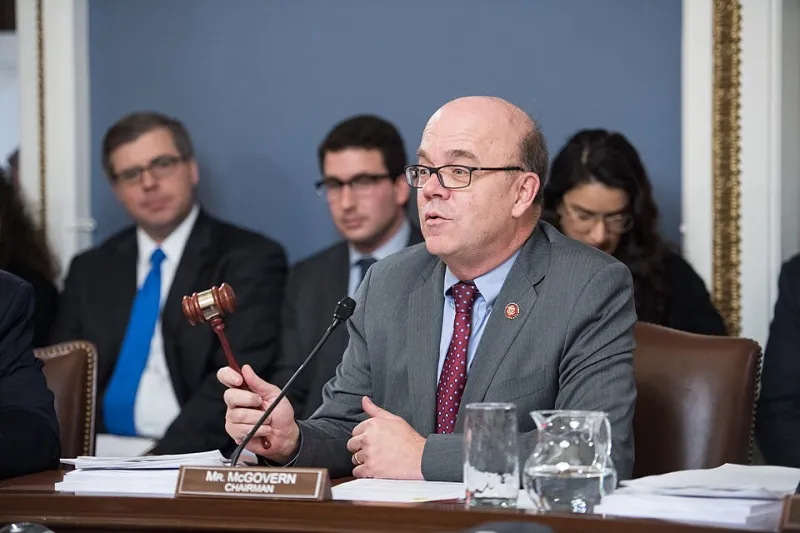
Photo: two politicians shaking hands bipartisan cooperation US Congress Capitol, via img.freepik.com
The public image of Congress — two warring tribes separated by an impassable partisan gulf — is not entirely wrong. Floor votes are increasingly predictable. Leadership negotiations routinely collapse. Bipartisan press conferences, once a reliable signal of genuine cooperation, have become performative enough that veteran Hill observers barely glance up from their phones when they occur.
And yet, legislation passes. Not always, not easily, and rarely without considerable pain — but it passes. When it does, a closer look at the legislative history frequently reveals something that the formal record obscures: a friendship. A text message exchange that began three years before the bill's introduction. A shared frustration that two members from opposite parties discovered, almost by accident, that they held in common.
"The deals that actually close almost always have a personal relationship underneath them," said one veteran Democratic House member, who has served more than a decade on the Appropriations Committee. "You can have all the policy alignment in the world, but if you don't trust the person you're negotiating with, you're not going to take the risk of moving first."
How These Relationships Begin
The origin stories are rarely dramatic. Representative Mike Lawler, a Republican from New York's Hudson Valley, and Representative Dan Goldman, a Democrat representing parts of Brooklyn and Manhattan, arrived in the 116th Congress as political opposites in almost every conventional sense. Lawler had won a suburban swing district by running against the national Democratic brand; Goldman had made his name as a House impeachment counsel. Their districts are geographically adjacent. That proximity — shared commuter concerns, overlapping constituent service issues, a mutual interest in Hudson River environmental policy — created the initial opening.
The dynamic is common. Members who share regional geography, even across party lines, often find more natural common ground than members of the same party separated by a continent. A Republican from coastal South Carolina and a Democrat from coastal Massachusetts may disagree profoundly on tax policy while discovering genuine alignment on fisheries regulation, port infrastructure, or the National Flood Insurance Program. These issue-specific overlaps, modest in themselves, can become the foundation for broader working relationships.
Military service provides another bridge. The informal veterans' caucus on Capitol Hill — members who have worn a uniform, from whatever branch and whatever era — operates with a degree of cross-partisan cohesion that is genuinely unusual. The shared experience of service, and the shared constituency of veterans and military families, creates a common language and a baseline of mutual respect that can survive considerable ideological difference.
The Infrastructure of Trust
Personal relationships in Congress are built and maintained through a set of informal institutions that rarely appear in civics textbooks. The congressional prayer breakfast, the bipartisan baseball game, the study groups and reading circles that form around shared intellectual interests — these gatherings are dismissed by cynics as theater, but members who participate describe them as genuinely formative.
The Wednesday Group, a loose association of moderate House Republicans, has for years served as a venue where members can speak candidly about policy concerns without the formal constraints of caucus messaging. Its Democratic equivalent, the New Democrat Coalition's informal working dinners, serves a similar function. When members from these two groups encounter each other — as they often do, precisely because both attract legislators interested in governing rather than performing — the conditions for productive conversation are already present.
Senator Jeanne Shaheen of New Hampshire and Senator Susan Collins of Maine represent perhaps the most frequently cited example of sustained cross-partisan collaboration in the current Senate. Their working relationship, built over more than a decade of service on the Appropriations Committee, has produced co-sponsored legislation on issues ranging from veterans' health care to election security. Staff on both sides describe the relationship as genuine — grounded in mutual respect, compatible work styles, and a shared conviction that the Senate's historical role as a deliberative body is worth preserving.
"They actually talk," said one senior Senate aide, granted anonymity to describe internal dynamics. "Not through intermediaries, not through press releases. They call each other. That sounds basic, but it's rarer than you'd think."
What These Alliances Can — and Cannot — Do
The legislative record of informal bipartisan relationships is real but bounded. The CHIPS and Science Act, which passed in 2022 with meaningful support from both parties, was shaped in part by a set of cross-partisan relationships among members of the Senate Commerce Committee who had spent years building common ground on semiconductor policy and supply chain vulnerability. The Bipartisan Safer Communities Act, the most significant federal gun legislation in nearly three decades, was the product of a negotiating group that included Senators Chris Murphy, John Cornyn, Kyrsten Sinema, and Thom Tillis — four members whose policy instincts differ substantially but who had developed sufficient personal trust to take the political risk of compromise.
These examples, however, exist within a structural reality that limits their replicability. Leadership in both chambers exercises significant control over the legislative calendar, committee assignments, and the terms of floor debate. A pair of members with genuine cross-partisan chemistry cannot simply negotiate a deal and bring it to the floor; they require the acquiescence of leaders who may have strong incentives to prevent a bipartisan success from complicating their electoral messaging.
"The relationships are real, but they operate in a system that often punishes you for using them," said one former Republican senator who requested anonymity. "You can build trust with a Democrat over years, and then your own leadership makes clear that acting on that trust will cost you a committee seat or a primary challenge. Most members eventually do the math."
The Fragility Factor
Personal relationships in Congress are also, by definition, personal — which makes them fragile in ways that institutional arrangements are not. When a key member retires, loses a primary, or is assigned to a different committee, the informal network built around them can dissolve quickly. The trust is not transferable; it must be rebuilt, relationship by relationship, with whoever replaces them.
This fragility is one reason why scholars who study legislative productivity are cautious about overstating the transformative potential of bipartisan friendships. They matter at the margins — and at the margins is often where legislation lives or dies — but they cannot substitute for the structural incentives that would make cross-partisan cooperation the norm rather than the exception.
What they can do, and what they demonstrably have done, is keep certain channels open during periods when the formal architecture of negotiation has broken down entirely. In a Congress where formal bipartisanship is increasingly difficult to perform publicly, the informal kind — conducted in back hallways, over shared meals, through text messages that will never appear in the Congressional Record — may be the only kind that works.
For the legislators who have cultivated these relationships, that is enough. For an institution struggling to demonstrate its relevance, it may have to be.