Vanishing Act: The Slow Extinction of the Congressional Middle Ground
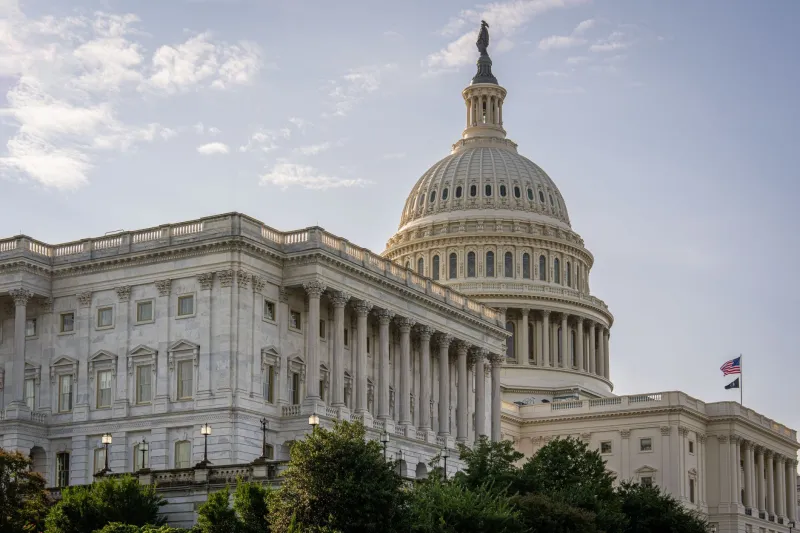
For decades, the phrase "reaching across the aisle" carried genuine legislative weight. It described a practiced art — the quiet negotiation, the mutual concession, the handshake in a corridor that preceded a bill's passage. Today, that phrase has become something closer to political mythology, invoked nostalgically by retiring lawmakers and political scientists while the conditions that once sustained it continue to erode.
The numbers tell a stark story. Political scientists who track congressional voting patterns using tools such as DW-NOMINATE scores — which plot legislators on an ideological spectrum based on their roll-call votes — have documented a near-complete sorting of both chambers. In the House, the ideological overlap between the most conservative Democrats and the most liberal Republicans, which was substantial as recently as the 1990s, has effectively collapsed. The Senate, long considered more insulated from partisan pressures by virtue of its longer terms and statewide constituencies, has followed closely behind.
What happened to the middle? The answer, most analysts agree, is not a single cause but a convergence of structural forces that have been decades in the making.
The Map That Moved the Median
Redistricting — the once-a-decade redrawing of congressional district boundaries — has long been understood as a mechanism of political power. What has become clearer in recent cycles is its cumulative effect on the ideological composition of Congress itself.
When state legislatures draw safe seats for their party's incumbents, they are not merely protecting individual members. They are systematically reducing the number of competitive districts where a candidate must appeal to a genuine cross-section of voters. A representative whose district is drawn to be reliably Republican by fifteen points does not face meaningful pressure from general-election competition. Their political survival depends almost entirely on satisfying a primary electorate — one that, by its nature, skews toward the more ideologically committed.
The practical consequence is a feedback loop. Safe districts produce ideologically homogeneous primary electorates. Those electorates reward ideological purity and punish compromise. The legislators they produce have little incentive — and often face genuine electoral risk — when they engage in the kind of transactional deal-making that once characterized effective legislating.
Several states have experimented with independent redistricting commissions as a corrective. California's commission-drawn maps have produced marginally more competitive districts in some regions. Arizona's independent commission has faced sustained legal and political challenges from legislative leaders reluctant to surrender the mapmaking pen. Whether these efforts can meaningfully reverse the structural trend remains an open and contested question among electoral reform advocates.
The Primary Problem
Beyond the map, the primary election itself has become a principal instrument of ideological enforcement. Voter turnout in primary elections is typically a fraction of general election participation, and the voters who do show up are disproportionately drawn from a party's most engaged — and most ideologically consistent — wing.
This dynamic creates what political scientists sometimes call a "primary veto" over moderation. A legislator who builds a record of bipartisan votes, however strategically sound that record might appear in a general election context, risks being characterized in a subsequent primary as insufficiently loyal to the party's core commitments. The threat need not materialize into an actual primary challenge to be effective. The anticipation of it shapes behavior.
Former Senator Jeff Flake of Arizona, who declined to seek re-election in 2018 after publicly breaking with his party's leadership, described the dynamic with unusual candor in his farewell address. He argued that a political culture that treats compromise as capitulation had made the Senate a less functional institution. His assessment was not universally shared by colleagues, but few disputed the underlying observation about the direction of travel.
Among current members, those who have maintained reputations as genuine cross-aisle negotiators are a dwindling cohort. Senators Susan Collins of Maine and Joe Manchin — the latter having since left the Democratic Party and ultimately the Senate — attracted sustained national attention precisely because functional bipartisanship had become rare enough to be newsworthy. That such routine legislative behavior commanded outsized media coverage is itself a measure of how far the institution has shifted.
The Media Accelerant
The structural forces of redistricting and primary dynamics do not operate in isolation. They are amplified by a media environment that has undergone its own profound transformation over the same period.
The collapse of local news infrastructure across much of the country has left many congressional districts without the sustained journalistic scrutiny that once held individual legislators accountable to their specific constituencies. In its place, national partisan media — operating across cable television, talk radio, and an expanding universe of digital platforms — has filled the information space with content that frames political events in terms of conflict, betrayal, and ideological contest.
For a legislator navigating this environment, the incentives are unambiguous. Confrontational statements generate coverage. Bipartisan cooperation, absent a dramatic narrative hook, is largely invisible. A member who negotiates a technical amendment to an agricultural appropriations bill will not find that achievement driving traffic on social media. A member who delivers a floor speech denouncing the opposing party almost certainly will.
This is not merely a matter of media preference. It has measurable consequences for how legislators allocate their time, how they communicate with constituents, and ultimately how they vote.
The Remaining Bridge-Builders
Among those who have studied Congress across multiple decades, there is genuine disagreement about whether the moderates who remain represent a durable constituency or a final generation.
In the House, a cluster of members affiliated with the bipartisan Problem Solvers Caucus — a group of roughly fifty members, evenly divided between Republicans and Democrats — has worked to position itself as a negotiating bloc on select issues, most notably the infrastructure legislation that ultimately passed in 2021. Members of the caucus argue that their model demonstrates the continued viability of cross-partisan cooperation when legislative conditions are favorable.
Critics counter that the caucus's influence has been episodic rather than structural, and that its members remain individually vulnerable to the same primary pressures that have claimed other centrists. Several former Problem Solvers members have either retired, lost primaries, or shifted their voting records in response to district-level political pressure.
In the Senate, the informal working groups that have periodically assembled to negotiate on immigration, budget agreements, and judicial confirmations reflect a similar dynamic — consequential in specific moments, but unable to sustain themselves as a consistent force against the broader currents of partisan sorting.
What Is Lost in the Sorting
The policy consequences of the disappearing center are not abstract. Legislative vehicles that require genuine bipartisan support — including budget agreements, immigration reform, and infrastructure investment — have become progressively more difficult to assemble. When they do pass, it is often after extended periods of gridlock, with outcomes shaped more by procedural exhaustion than deliberate negotiation.
Perhaps more significantly, the institutional knowledge embedded in the practice of legislative compromise is itself at risk. The skills required to build a working majority across ideological lines — the patience, the relationship cultivation, the willingness to accept incremental progress — are cultivated over time and through practice. As the legislators who possessed those skills retire or are defeated, and as the institutional culture grows less hospitable to their development, the capacity for effective lawmaking diminishes alongside the moderates themselves.
The disappearing center is, in this sense, more than an electoral phenomenon. It is a story about what Congress is becoming — and about what it may no longer be capable of producing.