Votes Cast, Bills Still Changing: The Shadow Edits Reshaping Legislation on the House Floor
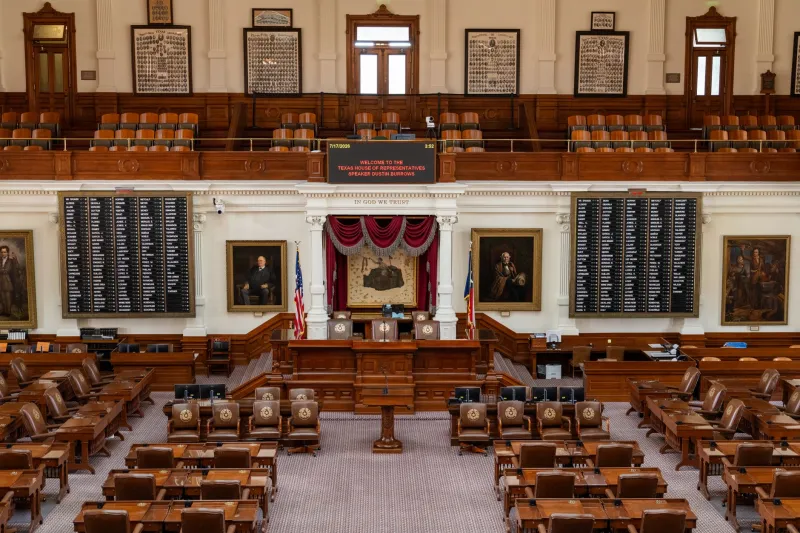
There is a version of American lawmaking that most civics textbooks describe: a bill is drafted, debated, amended through proper order, and finally put to a vote. What those textbooks do not describe is what sometimes happens during the vote itself — when staff operatives, armed with authorization that is rarely questioned and oversight that is rarely exercised, reach back into legislative text and alter it in real time.
This practice, increasingly common across both chambers but most visible in the House, has drawn quiet alarm from veteran legislative observers, former parliamentarians, and a small but growing faction of members who have begun to notice discrepancies between what they debated and what eventually became law.
The Mechanics of a Moving Target
Under standard legislative procedure, a bill that reaches the floor for a vote is supposed to be a settled document. Amendments are proposed, argued, and resolved before the voting clock begins. In practice, however, the boundary between the amendment process and the voting process has grown porous in ways that are difficult to track and even harder to challenge in the moment.
The mechanism most frequently exploited is the enrollment correction — a technical provision that allows designated staff to fix clerical errors in legislation before it is formally transmitted to the Senate or sent to the President. What began as a tool for correcting typos and formatting inconsistencies has, according to multiple former Hill staffers who spoke on condition of anonymity, gradually expanded into something far more consequential.
"The original intent was narrow," said one former senior counsel who spent over a decade working on House Judiciary. "You fix a cross-reference, you correct a citation. What it has become in some cases is a vehicle for substantive revision — changing definitions, adjusting dollar figures, inserting provisions that were never debated."
The enrolling clerk's office, which sits within the Office of the Clerk of the House, is the formal gateway for these corrections. But the requests originate with committee staff, leadership offices, and in some cases, with outside counsel whose clients have a direct financial or regulatory interest in the outcome.
What Members Do Not Know
The deeper problem, according to those familiar with the process, is not merely procedural — it is informational. Members of Congress cast votes based on the understanding that the text they reviewed during debate is the text that will be enrolled. When that assumption proves incorrect, the democratic legitimacy of the vote itself becomes uncertain.
Several members, speaking carefully to avoid appearing to accuse colleagues or leadership directly, have acknowledged that they occasionally discover post-vote discrepancies when reviewing enrolled legislation against earlier committee-passed versions. The differences are rarely flagged. They surface, if at all, through the painstaking work of outside legal analysts or advocacy organizations comparing bill versions line by line.
"Most offices don't have the staff capacity to do that kind of comparison," acknowledged a senior legislative director in a mid-Atlantic congressional office. "You're trusting that what you voted on is what you voted on. That trust is not always warranted."
The Congressional Research Service has documented instances in which enrolled bill text diverged from the version passed on the floor, though its reports on the subject are typically classified as internal working documents and not publicly released in full.
The Role of Leadership
Congressional leadership offices — on both sides of the aisle — play a central and underexamined role in this process. In periods of compressed legislative timelines, when major spending packages or authorization bills move from committee markup to floor vote within days or even hours, the practical authority over final bill language shifts dramatically toward small clusters of senior staff who report directly to leadership.
These individuals are not elected. They are not confirmed. They do not testify before committees. Yet in the crucial hours between a floor vote and formal enrollment, their discretion over legislative text is, for practical purposes, nearly absolute.
Former House parliamentarian aides describe a culture in which the pressure to accommodate last-minute requests — from leadership, from appropriators, from powerful committee chairs — makes it genuinely difficult to push back against changes that exceed the technical correction standard.
"There's an implicit hierarchy," said one former aide who worked in the parliamentarian's office during a period spanning two different Speakers. "When a request comes down from leadership staff, the question of whether it crosses a line becomes very uncomfortable to raise out loud."
Structural Pressures That Enable the Practice
Several structural features of the modern Congress have made this dynamic more prevalent than it was a generation ago. The consolidation of legislative power in leadership offices — a trend that accelerated under both Republican and Democratic Speakers over the past two decades — has reduced the independent authority of committees and their staff. As a result, the deliberative work of producing settled legislative text has been compressed and centralized in ways that create both opportunity and incentive for last-minute revision.
Simultaneously, the sheer complexity of contemporary legislation has made member-level review increasingly nominal. Omnibus spending bills running thousands of pages are often filed within 24 to 48 hours of a scheduled vote. Under those conditions, what a member votes on is less a document they have read than a document they have been assured is acceptable by staff they trust.
That trust, which is itself a structural feature of how Congress functions, is precisely what makes the practice difficult to expose and harder still to reform.
A Transparency Gap With Real Consequences
The policy consequences of real-time bill revision are not abstract. Provisions that expand regulatory exemptions, alter funding formulas, or redefine statutory terms can carry significant economic and legal weight. When those provisions are inserted after debate has concluded — and in some cases after voting has begun — the public record of why they exist is effectively nonexistent. There is no floor debate to review, no amendment vote to examine, no sponsor on record.
Advocacy groups that track legislative text across versions have documented cases in which final enrolled law included provisions that appeared in no publicly available draft prior to enrollment. In several instances, those provisions aligned closely with language that had been circulated by industry lobbyists during the markup process but had not survived committee consideration through regular order.
The implication — that provisions rejected in committee can sometimes find their way into enrolled law through the back channel of enrollment correction — is one that neither chamber's leadership has been eager to address publicly.
Reform Efforts and Their Limits
A small number of lawmakers have introduced measures that would require greater transparency around enrollment corrections, including mandatory public disclosure of any changes made between the floor vote and formal enrollment. Those efforts have not advanced, in part because they lack support from the leadership offices whose operational flexibility they would most constrain.
The House Rules Committee, which controls the procedural architecture of floor consideration, has the authority to impose stricter standards on what qualifies as a permissible enrollment correction. It has not done so.
Until institutional pressure mounts sufficiently to force reform, the practice will likely continue — quiet, consequential, and largely invisible to the members who cast the votes and the constituents who sent them to Washington to cast them.