Signed Without Reading: The Art of Hiding Federal Billions Inside Bills No Lawmaker Has Fully Seen
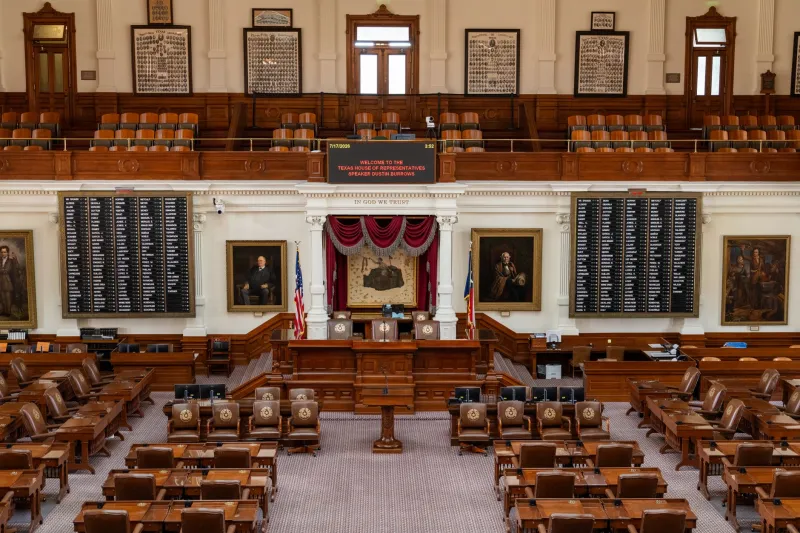
In the final hours before a government funding deadline, a spending bill of several thousand pages lands on the desks of United States senators and representatives. Few will read it in full. Fewer still will understand every provision buried within it. And yet, within hours, those same legislators will cast votes that commit the federal government to trillions of dollars in expenditures, redirect funding streams worth hundreds of millions, and quietly rewrite policy in ways that may not surface publicly for months — if ever.
This is not an aberration. It is, by nearly every account from those who have worked inside the process, the design.
The Document Nobody Is Supposed to Fully Read
Modern omnibus and continuing resolution legislation has evolved into something that defies conventional comprehension. A single consolidated appropriations bill may span anywhere from 2,000 to 4,000 pages, incorporating the work of a dozen subcommittees, thousands of line items, and hundreds of policy riders — small, targeted provisions that alter existing law without ever receiving a standalone hearing or floor debate.
Former Senate Appropriations Committee staffers describe a drafting environment that is less about clarity and more about accommodation. When multiple competing interests must be satisfied within a single document, the language that emerges is often deliberately ambiguous — broad enough to allow administrative discretion, narrow enough to direct funding toward specific recipients without naming them outright.
"You learn early on that the bill text is not the whole story," said one former senior appropriations aide who worked on the Senate side for more than a decade. "The real decisions live in the report language, in the footnotes, in the cross-references that send you forty pages in another direction. By the time you've traced a single provision back to its origin, three more have passed without scrutiny."
The Mechanics of Deliberate Complexity
Several specific techniques have become standard practice in the drafting of large-scale spending legislation, according to former Hill staffers and independent budget analysts.
The first is what insiders call "definitional drift" — the practice of embedding changes to existing statutory definitions within new appropriations language. Because the change appears as a funding clarification rather than a policy amendment, it rarely triggers the procedural scrutiny reserved for standalone legislation. The practical effect, however, can be sweeping: a redefined eligibility threshold, for instance, may silently exclude or include entire categories of recipients from federal programs.
A second technique involves the strategic placement of consequential provisions within sections of a bill that carry neutral or procedural headings. A provision significantly expanding an agency's enforcement authority, for example, may appear under a heading as unremarkable as "Administrative Provisions — Department of Commerce." Without a topical index cross-referencing substantive policy changes — which most bills do not provide — there is no reliable mechanism for a legislator, or a journalist, to locate it without reading every page.
A third approach exploits the relationship between bill text and accompanying committee reports. Appropriations bills are almost always accompanied by lengthy committee reports that purport to explain congressional intent. These reports are not legally binding, but federal agencies routinely treat them as authoritative guidance. Staffers who understand this dynamic can direct agency behavior through report language alone — language that receives even less public scrutiny than the bill itself.
Lawmakers in Their Own Words
The degree to which legislators themselves acknowledge the opacity of this process is, on its own terms, remarkable. In floor statements, interviews, and committee hearings over the past decade, members of both chambers and both parties have described voting on legislation they had not read — sometimes with apparent frustration, sometimes with what amounts to institutional resignation.
Representatives from the House Freedom Caucus have been among the most vocal critics of the practice, though similar objections have surfaced across the ideological spectrum. The complaint is consistent: leadership-driven deadline pressure, combined with the sheer physical impossibility of reviewing thousands of pages in a matter of hours, forces members into binary choices — vote yes on a document they cannot fully evaluate, or risk a government shutdown.
The procedural architecture reinforces this dynamic. Under the rules governing most large spending packages, floor amendments are either prohibited or strictly limited. Members who object to a specific provision embedded within an omnibus bill have virtually no recourse short of voting against the entire package — a vote that carries consequences extending far beyond the offending language.
Budget Experts Weigh In
Independent analysts who study federal appropriations say the problem is structural and, in important respects, self-perpetuating.
The consolidation of twelve separate annual appropriations bills into a single omnibus package — a practice that has become routine in recent Congresses — dramatically amplifies the opacity inherent in any single bill. When funding for the Department of Defense, the Department of Health and Human Services, and the Environmental Protection Agency all appear within the same document, the cognitive demand placed on any individual legislator becomes effectively insurmountable.
"There is no member of Congress who has read an omnibus appropriations bill in its entirety before voting on it," said a senior fellow at a nonpartisan fiscal policy institute. "That is not a criticism of individual legislators. It is a description of a system that has been allowed — and in some respects engineered — to outpace human comprehension."
The Congressional Budget Office, which provides cost estimates for legislation, is itself constrained in what it can evaluate within the compressed timelines that typically govern final passage. Provisions that alter mandatory spending trajectories, create new entitlement pathways, or establish funding mechanisms outside the traditional discretionary framework may receive incomplete analysis — or none at all — before a vote occurs.
The Transparency Gap and Its Consequences
The consequences of this opacity extend well beyond the legislative process itself. Federal agencies receiving ambiguous or internally contradictory appropriations language must exercise interpretive discretion that, in effect, transfers policy-making authority from Congress to the executive branch — precisely the outcome that annual appropriations are constitutionally designed to prevent.
Advocacy organizations, inspectors general, and government accountability offices frequently identify provisions in enacted spending legislation that were not publicly flagged before passage. Some of these provisions are benign technical corrections. Others represent significant shifts in federal policy that would, if introduced as standalone legislation, attract substantial public debate.
The reform proposals that surface periodically — mandatory 72-hour reading periods, enhanced floor amendment rights, restrictions on the use of omnibus vehicles — have consistently failed to gain traction in a legislative environment where the incentives for opacity remain powerful and the political cost of transparency is unevenly distributed.
Until those incentives change, the spending bill that nobody fully reads will continue to arrive on schedule — thousands of pages, billions of dollars, and a quiet transfer of consequential decisions from the floor of Congress to the offices of the staffers who drafted the language in the first place.