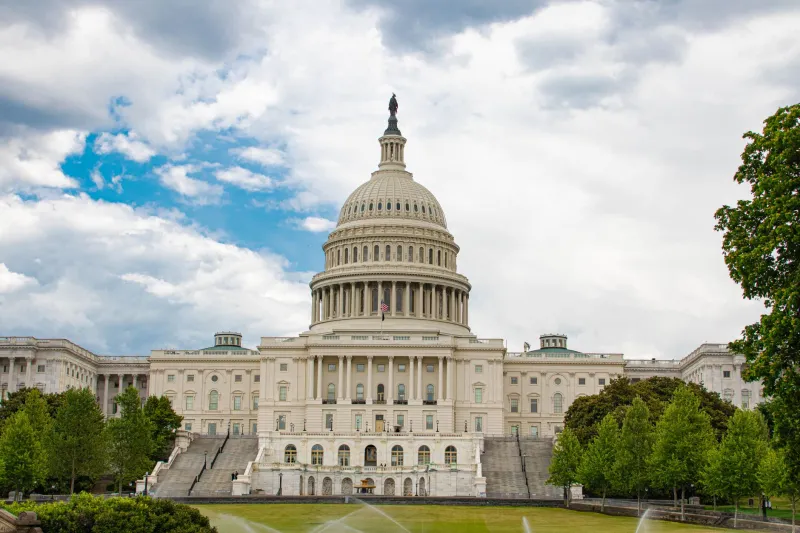
Penciled In: How Lobbying Firms Are Quietly Redrafting America's Fiscal Blueprint
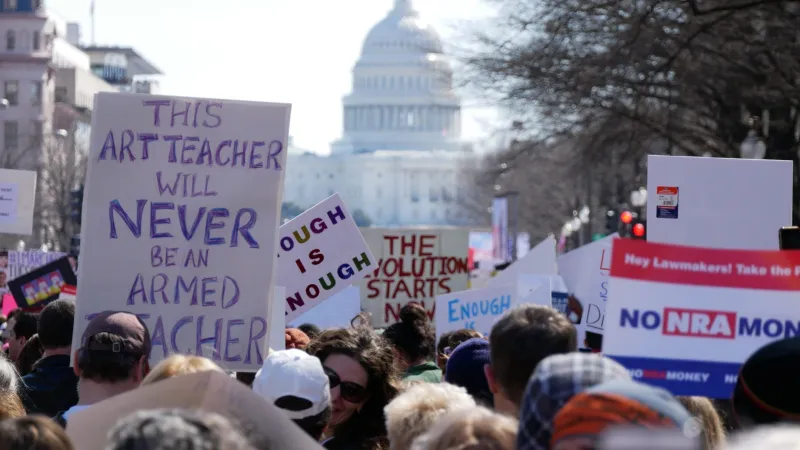
Every year, as Congress lurches toward another deadline-driven appropriations showdown, something predictable happens in the corridors that connect K Street to Capitol Hill. Lobbyists begin making calls. Staffers begin fielding them. And somewhere in the sprawling machinery of the federal budget, a sentence—sometimes fewer than thirty words—gets quietly inserted that will redirect millions of dollars, suspend an environmental rule, or carve a new exemption into the tax code.
This is not a new phenomenon. But the sophistication, scale, and strategic patience with which specialized lobbying firms now operate during the annual appropriations and budget reconciliation process has reached a level that concerns veterans of both parties who have watched it evolve over decades.
The Anatomy of a Budget Rider
To understand how fiscal language becomes law without ever receiving a proper hearing, it helps to understand what budget riders actually are—and why they are so valuable to those who know how to use them.
A rider is a legislative provision attached to a larger spending or reconciliation bill, often bearing no direct relationship to the bill's primary purpose. In the context of appropriations, riders can prohibit agencies from enforcing specific regulations, redirect mandatory spending toward particular programs, or alter eligibility thresholds in ways that benefit narrow constituencies. Because they travel inside must-pass legislation, they are rarely subjected to the kind of stand-alone debate that would expose their implications to public scrutiny.
Former Senate Appropriations Committee staff members describe the process with a kind of weary familiarity. During the final compression of negotiations—when exhausted staffers are reconciling hundreds of competing demands against hard deadlines—a single amendment can slip through not because anyone endorses it, but because no one has the time or political capital to fight it.
"The leverage in that moment is extraordinary," said one former senior appropriations aide who requested anonymity to speak candidly. "If you've got a member willing to slow things down over your provision, and leadership needs their vote, the calculus changes very quickly."
The Specialists Who Know Where to Push
Not every lobbying firm operates at this level. The budget rider game requires a specific kind of institutional knowledge—familiarity with procedural rules, relationships with the right committee staff, and the patience to wait for the right legislative vehicle.
Over the past decade, a cluster of boutique firms has distinguished itself by developing precisely this expertise. Rather than competing on broad policy advocacy, these operations focus narrowly on the appropriations process itself, offering clients what amounts to a surgical insertion service: identifying the right bill, the right amendment, and the right moment.
Public disclosure records filed under the Lobbying Disclosure Act reveal patterns that are difficult to explain through conventional advocacy alone. In multiple recent fiscal cycles, provisions with no corresponding committee hearing, no floor debate, and no named sponsor have appeared in final reconciliation packages—provisions that, upon examination, closely track language that had been circulating in industry white papers months earlier.
One particularly instructive case involves a 2022 appropriations rider affecting the classification of certain agricultural byproducts under Environmental Protection Agency waste disposal rules. The provision, spanning two sentences in a 4,000-page omnibus bill, effectively exempted a category of industrial farming operations from regulatory oversight that had been years in development. No committee had deliberated on the underlying policy question. No hearing had been held. The language materialized in conference negotiations and survived into the final text.
The beneficiaries, as subsequent lobbying disclosures made clear, had retained a firm with deep ties to the Senate Appropriations Committee the previous year.
Reconciliation as a Legislative Back Channel
The budget reconciliation process, originally designed as a tool for aligning spending and revenue levels with congressional budget resolutions, has become one of the most consequential—and least transparent—legislative vehicles in Washington. Because reconciliation bills are shielded from Senate filibuster under specific procedural rules, they move with unusual speed and face fewer procedural obstacles than standard legislation.
That velocity is precisely what makes them attractive to interests seeking to embed policy changes that might not survive open debate.
The Byrd Rule, which prohibits extraneous provisions from reconciliation bills, is theoretically a check on this behavior. In practice, enforcement is inconsistent and heavily dependent on whether a senator chooses to raise a point of order—a step that requires both awareness of the offending provision and the political will to challenge it publicly.
"The Byrd Rule has teeth, but only if someone decides to use them," said a former Senate parliamentarian's office staffer. "When you're in the final hours of a reconciliation push, members aren't combing through the bill looking for violations. They're trying to get to a vote."
The Transparency Gap
Critics on both sides of the aisle have long acknowledged this structural vulnerability, yet reform efforts have consistently stalled. Proposals to require that all budget riders be publicly disclosed alongside their sponsors for a minimum review period before floor votes have attracted bipartisan support in the abstract but rarely survive the legislative calendar.
The reasons are not difficult to identify. The same procedural flexibility that allows lobbying-driven provisions to enter spending bills also benefits the members who rely on the process to deliver targeted wins for their own districts and donor networks. Closing the door entirely would cost everyone something.
Transparency advocates argue that at minimum, the public deserves a searchable, real-time database linking final appropriations language to the lobbying disclosures filed by interests that advocated for similar provisions. Current disclosure requirements capture who lobbied and on what general subject, but they do not require lobbyists to identify specific legislative text they sought to influence—a gap that allows the connection between K Street drafting and Capitol Hill outcomes to remain largely invisible.
What Accountability Looks Like
Some members of Congress have begun pushing back, albeit cautiously. A handful of appropriators in the House have experimented with requiring that late-stage riders be accompanied by a brief explanatory statement identifying the policy rationale. The requirement has no enforcement mechanism and is routinely ignored, but its proponents argue that even the expectation of explanation creates a modest deterrent.
Outside Congress, investigative journalists and nonprofit watchdog organizations have done more to map the contours of this shadow process than the legislative branch itself. By cross-referencing lobbying disclosure filings, final bill text, and public records requests, researchers have documented dozens of instances where enacted fiscal language tracked industry-drafted proposals with near-verbatim precision.
The picture that emerges is not one of corruption in the traditional sense. Most of what happens is technically legal, disclosed in at least partial form, and conducted by professionals who understand the rules. It is, rather, a story about institutional design—about a legislative process that has developed structural blind spots large enough to drive entire regulatory agendas through.
For engaged citizens trying to understand how fiscal policy actually gets made, the formal record—committee markups, floor debates, roll-call votes—tells only part of the story. The rest is written in the margins, in the hours before a deadline, in language that few will read until after it has already become law.