Scorekeepers of the Republic: The Anonymous CBO Economists Who Decide What Congress Can Afford to Promise
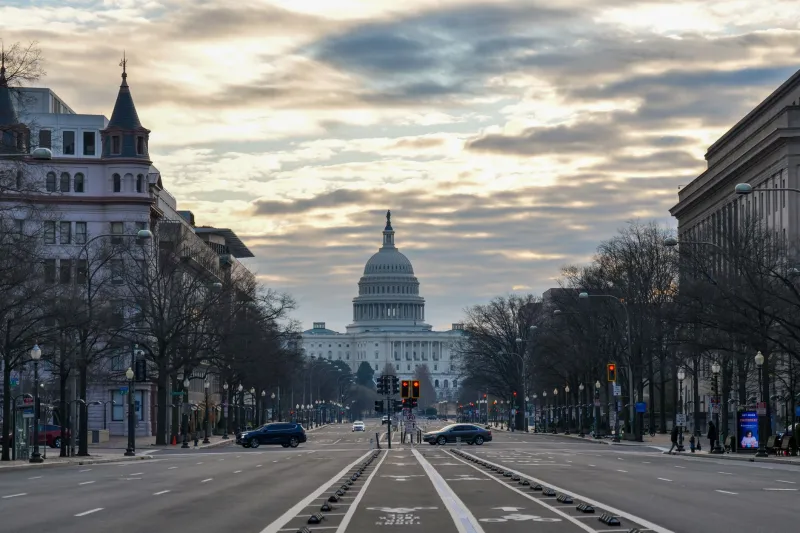
When a senator stands at a podium and declares that a sweeping new spending bill will cost taxpayers a specific figure — or, conversely, that a proposed tax overhaul will reduce the deficit by a precise sum — those numbers rarely originate from the lawmaker's own office. They come from a low-profile building near Capitol Hill that most Americans could not locate on a map: the headquarters of the Congressional Budget Office.
Founded in 1974 as a check on executive branch budget authority, the CBO has grown into something its architects may not have fully anticipated — the final word on fiscal credibility in Washington. Its analysts do not lobby. They do not testify frequently. They do not hold press conferences. Yet the estimates they produce carry a weight in legislative debates that rivals the influence of any cabinet secretary or party whip.
What Scoring Actually Means
In congressional parlance, "scoring" a bill refers to the formal process of estimating its budgetary impact over a defined window — typically ten years. The CBO's score determines whether a piece of legislation complies with budget rules, whether it can advance through the reconciliation process without triggering parliamentary objections, and ultimately whether it is politically viable for leadership to bring to the floor.
The mechanics are more complex than they appear. Analysts must project behavioral responses to policy changes, account for economic feedback effects under certain methodological frameworks, and apply assumptions about inflation, interest rates, and program participation that are inherently uncertain. A modest shift in any one of those assumptions can move a score by tens of billions of dollars — enough to transform a bill from a deficit reducer into a budget buster overnight.
This is where the power resides. The CBO does not decide policy. But by controlling the numbers that define the terms of debate, its economists shape which proposals are politically survivable and which quietly die in committee.
The Architecture of Institutional Trust
The CBO's authority rests on a carefully maintained reputation for nonpartisanship — a reputation that has taken decades to build and that the office guards with considerable institutional care. Career analysts, not political appointees, conduct the bulk of the technical work. Staff turnover is low by Washington standards. Many economists at the agency have worked there through multiple administrations of both parties, developing an institutional memory that no political transition can easily erase.
The office's director is appointed jointly by the Speaker of the House and the Senate President pro tempore, a structural feature designed to insulate the position from single-party capture. In practice, directors have come from both sides of the ideological spectrum without dramatically altering the agency's methodological commitments.
That consistency is precisely what makes CBO scores so valuable — and so contested. When a party in power dislikes a particular estimate, the standard response is not to dispute the underlying math openly, but to question the assumptions embedded in the model. Arguments over so-called "dynamic scoring," which attempts to capture macroeconomic growth effects of tax policy, have become a perennial proxy war for these deeper disagreements.
When Numbers Become Weapons
The political weaponization of CBO scores is not incidental to the budget process — it is central to it. Majority parties routinely structure legislation to achieve favorable scores, sometimes in ways that bear little resemblance to how the policy would function in practice. Provisions are written with artificial sunset dates specifically to hold down ten-year cost estimates, even when everyone involved understands the political likelihood of those provisions being extended indefinitely.
Minority parties, meanwhile, treat adverse CBO scores as opposition research. A finding that a bill adds to the deficit becomes a press release within hours. A score that contradicts an administration's economic projections transforms into a talking point repeated across cable news cycles for days.
The CBO is rarely positioned to respond. The office issues formal responses to methodological critiques when warranted, but it does not engage in political combat. Its analysts write technical reports, not op-eds. This restraint is both a professional ethic and a strategic necessity — the moment the office is perceived as taking sides, its foundational value evaporates.
The Limits of the Ledger
For all its institutional credibility, the CBO operates under constraints that its most informed critics are right to acknowledge. The agency scores legislation as written, not as it is likely to be administered. It cannot fully account for the implementation failures, regulatory interpretations, and bureaucratic realities that often determine a program's actual fiscal footprint. Its models are built on historical relationships that may not hold under novel economic conditions.
The office has also faced persistent criticism for underestimating the economic growth effects of tax reductions and, from the other direction, for being insufficiently attentive to the long-run fiscal consequences of entitlement expansions. These critiques reflect genuine methodological debates within economics, not mere partisan complaint. The CBO's response has generally been to acknowledge uncertainty ranges and to publish sensitivity analyses — a technically honest approach that satisfies economists more readily than it satisfies politicians seeking a clean headline number.
Quiet Influence, Lasting Consequences
What makes the CBO's position genuinely remarkable is the gap between its public obscurity and its policy significance. The analysts who produce these estimates are not household names. Their salaries are modest by the standards of the Washington policy world. They do not move through the revolving door into lobbying firms or trade associations the way that many Hill staffers do.
Yet the practical consequences of their work are vast. The design of the Affordable Care Act was substantially shaped by the need to achieve a favorable CBO score. The structure of the 2017 tax legislation — including the sunset provisions that continue to generate legislative controversy — reflected, in part, the constraints imposed by the scoring process. Every major fiscal negotiation in recent memory has involved lawmakers and their staffs gaming out CBO reactions before committing to specific provisions.
In this sense, the budget analysts on Massachusetts Avenue function as an invisible constraint on democratic ambition — not because they seek that role, but because Congress has organized its rules around their judgments. They are the scorekeepers of a game they did not design, enforcing boundaries that lawmakers simultaneously resent and rely upon.
Understanding that dynamic is essential for any engaged citizen trying to make sense of why legislation that commands broad public support so often emerges from the congressional process unrecognizable, stripped down, or delayed indefinitely. The answer, more often than most reporting acknowledges, begins with a cost estimate from a building that rarely makes the news.