What Leaves With Them: The Silent Crisis of Vanishing Congressional Expertise
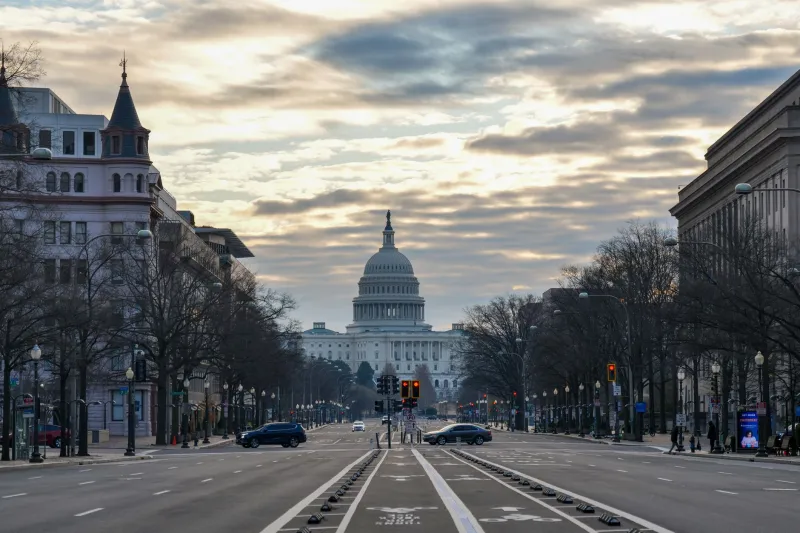
When a senior appropriations subcommittee chair retires after two decades on Capitol Hill, the farewell reception in the Rayburn Building typically draws colleagues, lobbyists, and a few television cameras. What the cameras do not capture is the simultaneous departure of something far more difficult to replace: the accumulated procedural memory, the informal negotiating relationships, and the hard-won subject-matter fluency that made that lawmaker — and, crucially, his or her staff — genuinely effective at the craft of legislation.
That invisible loss is now occurring with alarming regularity across both chambers of Congress, and the consequences are reshaping how American law actually gets written.
A Turnover Problem Without a Paper Trail
Congressional turnover is hardly a new phenomenon, but its current pace and character represent something distinct from historical patterns. The combination of voluntary retirements among senior members, an increasingly volatile electoral environment that punishes incumbency in swing districts, and a growing advocacy movement for formal term limits has compressed the average tenure of sitting legislators to levels not seen in decades.
The practical result is a legislature in which fewer and fewer members possess firsthand experience navigating the full arc of a major policy fight — from the initial markup in subcommittee through floor amendment battles, conference negotiations with the Senate, and the subsequent implementation oversight that determines whether a law actually achieves its stated purpose.
"There used to be a kind of apprenticeship model on the Hill, even if nobody called it that," said one former senior Democratic staff director who spent nearly thirty years working on energy and commerce legislation before departing in 2022. "Junior members watched senior members. Junior staff watched senior staff. The knowledge transferred through proximity and repetition. That transmission mechanism has broken down."
The breakdown is not merely anecdotal. Studies of congressional staff tenure conducted by institutions including the Congressional Management Foundation have documented steady declines in the average length of service among professional committee staff — the policy specialists who translate a lawmaker's broad intentions into technically precise statutory language. When those staffers leave, often for substantially higher compensation in the private sector, they take with them an understanding of legislative history, regulatory precedent, and inter-agency relationships that cannot be recovered from a briefing document.
The Uncodified Architecture of Lawmaking
What makes this brain drain particularly consequential is the degree to which congressional effectiveness depends on knowledge that is never formally documented. Experienced legislators and their senior aides carry mental maps of informal power structures — which committee staff at the Senate Finance Committee will actually negotiate in good faith, which executive branch career officials can be trusted to provide technically accurate assessments, which seemingly minor statutory provisions carry enormous downstream regulatory implications.
This kind of knowledge is not housed in any database. It does not appear in the Congressional Record. It lives in the institutional memory of individuals, and when those individuals leave, it leaves with them.
"You lose the oral history of why certain provisions were written the way they were," explained a Republican appropriations staffer with more than fifteen years of committee experience. "Sometimes a line in a spending bill that looks arbitrary is actually the product of a decade of negotiation with a specific federal agency. A new staffer reading it cold has no way of knowing that. They may inadvertently undo a carefully constructed compromise simply because they don't know it exists."
The implications extend beyond technical drafting errors. Experienced lawmakers possess an intuitive understanding of which legislative strategies are likely to survive procedural challenge, which coalition arrangements are durable under pressure, and which policy designs have failed in prior iterations — knowledge that prevents the repetition of costly mistakes.
New Members, Steep Learning Curves
For incoming legislators, the gap between campaign rhetoric and governing reality has always been wide. But institutional historians who study Congress argue that the gap has grown considerably wider as the experienced members who once served as informal mentors have thinned in number.
Freshman members arriving in Washington now often find themselves assigned to committees where the senior members have served for only a handful of terms themselves. The informal guidance networks that once oriented new legislators — the dinner conversations, the bipartisan caucus retreats, the floor cloakroom exchanges — have atrophied alongside the broader decline in cross-party social interaction.
"The old bulls used to take the new members to dinner," said one institutional historian who has studied congressional culture for more than two decades. "Not for any formal mentoring purpose. Just because that was what you did. And in the course of those dinners, an enormous amount of practical wisdom changed hands. That culture is largely gone."
The result, multiple observers note, is a cohort of legislators who are genuinely eager to legislate but who lack the contextual scaffolding to do so effectively — and who may not yet know enough to recognize what they do not know.
Can Institutional Memory Be Preserved?
Some efforts to address the problem are underway, though none has achieved the scale the challenge demands. The Congressional Research Service continues to provide nonpartisan policy analysis to members and staff, and its institutional role has grown in importance as committee staff ranks have thinned. Several bipartisan reform organizations have proposed expanded oral history programs that would systematically capture departing lawmakers' and staffers' institutional knowledge before it dissipates.
Other proposals have focused on strengthening the staffing infrastructure of Congress itself — reversing decades of budget pressure that has kept congressional staff salaries well below comparable private-sector compensation, and investing in longer-term career development programs that might reduce the incentive to depart for K Street.
Yet these proposals face a structural challenge that is almost paradoxical in nature: the very turnover that has depleted institutional memory has also reduced the number of legislators who fully appreciate what has been lost. Members who have served for only a term or two have no personal baseline against which to measure the current deficit.
"You can't miss something you never had," the former staff director observed. "The new members think this is just how Congress works. They don't know it used to work differently."
The Governance Stakes
The consequences of this erosion are not confined to procedural inefficiency. When institutional memory degrades, the effective power to shape legislation migrates toward those actors who do possess long institutional memory — most notably, the lobbyists and trade association attorneys who have worked the same policy corridors for decades and whose expertise now frequently exceeds that of the lawmakers they are nominally petitioning.
This dynamic does not produce corruption in any straightforward sense. But it does produce a subtle and largely invisible shift in where legislative expertise actually resides, and therefore where genuine policy influence flows.
For a legislature whose constitutional authority rests on its capacity to make informed collective judgments about public policy, that shift carries implications that extend well beyond any single bill or any single Congress. The question of what leaves with departing lawmakers is, in the end, a question about whether Congress can sustain the governing capacity that democratic self-government requires — and, at present, the answer is less certain than it ought to be.