Behind Closed Doors: The Subcommittee Chairs Who Actually Write America's Laws
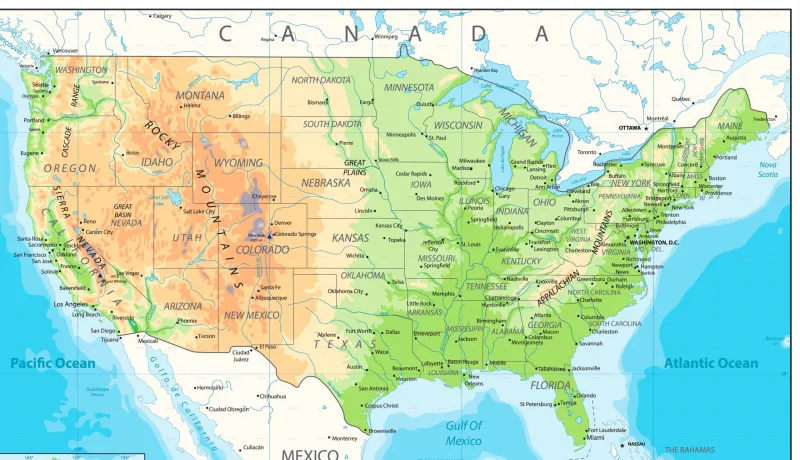
Photo: US Capitol Hill committee hearing room Congress empty chamber, via printablemapofusa.com
When most Americans picture Congressional power, they imagine the familiar tableau: a full committee hearing, cameras rolling, a senior senator leaning into a microphone. What that image misses is the quieter, more consequential action happening one floor below that spectacle — in the markup sessions, budget negotiations, and closed-door briefings where subcommittee chairs hold almost unilateral authority over the shape of federal policy.
These positions rarely generate national press coverage. They are not the stuff of cable news segments or presidential endorsements. Yet within the architecture of the United States Congress, subcommittee chairs exercise a form of power that is, in many practical respects, more durable and more precise than that of their more prominent colleagues.
A Structural Advantage Built Into the System
The modern congressional committee system distributes legislative responsibility across more than 200 subcommittees in the House and Senate combined. Each subcommittee is typically assigned jurisdiction over a narrow but consequential policy domain — a specific branch of the tax code, a segment of the defense budget, a slice of agricultural or environmental regulation.
The chair of each subcommittee controls the hearing calendar. That authority alone is formidable. A subcommittee chair who declines to schedule a hearing on a particular bill has, in effect, killed that legislation without a single recorded vote. There is no override mechanism, no formal appeal. The chair's prerogative is nearly absolute within that jurisdiction.
Beyond scheduling, subcommittee chairs frequently manage the initial drafting of legislative text — the language that, once written, proves extraordinarily difficult to alter as a bill advances through the process. Lobbyists, agency officials, and advocacy groups have long understood this reality. They target subcommittee chairs early and often, precisely because influence at that stage is worth exponentially more than influence applied later.
Case Study: Defense Appropriations and the Power of the Purse
Few examples illustrate the dynamic more clearly than the defense subcommittees of the House and Senate Appropriations Committees. The chair of the Defense Appropriations Subcommittee — a position that rotates with majority control but consistently commands deference from Pentagon officials, defense contractors, and military branch leadership — effectively writes the annual defense budget before the full committee ever convenes.
In recent appropriations cycles, subcommittee chairs have inserted line items for specific weapons programs, directed funding away from Department of Defense modernization initiatives they personally opposed, and placed conditions on foreign military assistance that later became central to broader foreign policy debates. These decisions are made in subcommittee markups that receive a fraction of the media attention devoted to floor votes.
Former congressional budget staff describe the phenomenon with consistent language: by the time a defense authorization bill reaches the House floor, the most consequential decisions have already been made by a handful of members most voters could not identify.
Healthcare Innovation and the Subcommittee Bottleneck
The pattern extends well beyond defense. On the Senate Health, Education, Labor and Pensions Committee, subcommittee jurisdiction over biomedical research and public health has functioned as a decisive filter for federal investment in healthcare innovation. During the debates over pharmaceutical pricing reform and the post-pandemic restructuring of the National Institutes of Health budget, subcommittee-level negotiations shaped the final contours of legislation before leadership ever weighed in publicly.
Similarly, within the House Energy and Commerce Committee, the Subcommittee on Health has repeatedly determined which drug pricing provisions survive into broader healthcare packages and which are stripped out during markup. Members of that subcommittee who maintain close relationships with pharmaceutical industry stakeholders have, on multiple occasions, successfully narrowed the scope of legislation that arrived at the full committee with considerably broader ambitions.
This is not corruption in any legal sense. It is the system functioning precisely as designed — or, more accurately, as it has evolved. The concentration of early-stage legislative authority in subcommittee chairs reflects decades of procedural accretion, not a single deliberate choice.
Profiles in Procedural Influence
To understand how these dynamics play out in practice, consider the position of a subcommittee chair on the Senate Finance Committee's panel covering taxation and IRS oversight. That member controls the initial drafting of tax code modifications, determines which witnesses testify about proposed changes, and manages the pace of deliberation on provisions that affect trillions of dollars in annual federal revenue. The position is rarely discussed in presidential debates. It does not generate the fundraising appeal of a Senate Armed Services Committee seat. But among tax attorneys, corporate finance officers, and Treasury Department officials, the identity and priorities of that subcommittee chair are matters of continuous professional concern.
The House Appropriations Subcommittee on Financial Services and General Government offers another illustration. Its chair exercises direct influence over the budgets of agencies including the Treasury Department, the Executive Office of the President, and the federal judiciary. The ability to increase or restrict funding for specific agency functions — including enforcement divisions and regulatory offices — translates into meaningful policy outcomes without requiring a single floor vote.
The Visibility Gap and Its Consequences
The disconnect between the influence these positions carry and the public attention they receive has real implications for democratic accountability. Voters in a subcommittee chair's district often have no awareness of the specific legislative powers their representative holds. National advocacy organizations and industry groups, by contrast, track these positions with precision and allocate their engagement resources accordingly.
This asymmetry advantages organized interests over diffuse public ones. It is not a new observation — scholars of congressional procedure have documented the dynamic for decades — but it has grown more pronounced as the volume and complexity of federal legislation has increased, and as media coverage of Congress has narrowed toward floor drama and leadership conflict.
Former members who have held subcommittee chairs describe the experience in terms that are revealing precisely because they are so understated. The work is technical, often unglamorous, and conducted largely outside public view. The influence, however, is anything but marginal.
Accountability Without Attention
Reform advocates have long argued that the subcommittee system requires greater transparency — more public markups, mandatory disclosure of draft legislative language, and clearer documentation of which members are responsible for specific provisions. Progress on these fronts has been incremental at best.
Until that changes, the most consequential decisions shaping federal defense spending, healthcare policy, tax law, and regulatory oversight will continue to be made by officials whose names appear in the fine print of committee rosters rather than in the headlines that most Americans actually read. The machinery of American lawmaking runs on procedural authority, and nowhere is that authority more concentrated — or more quietly exercised — than in the offices of subcommittee chairs.
For engaged citizens seeking to understand where policy actually originates, the answer is rarely where the cameras point.